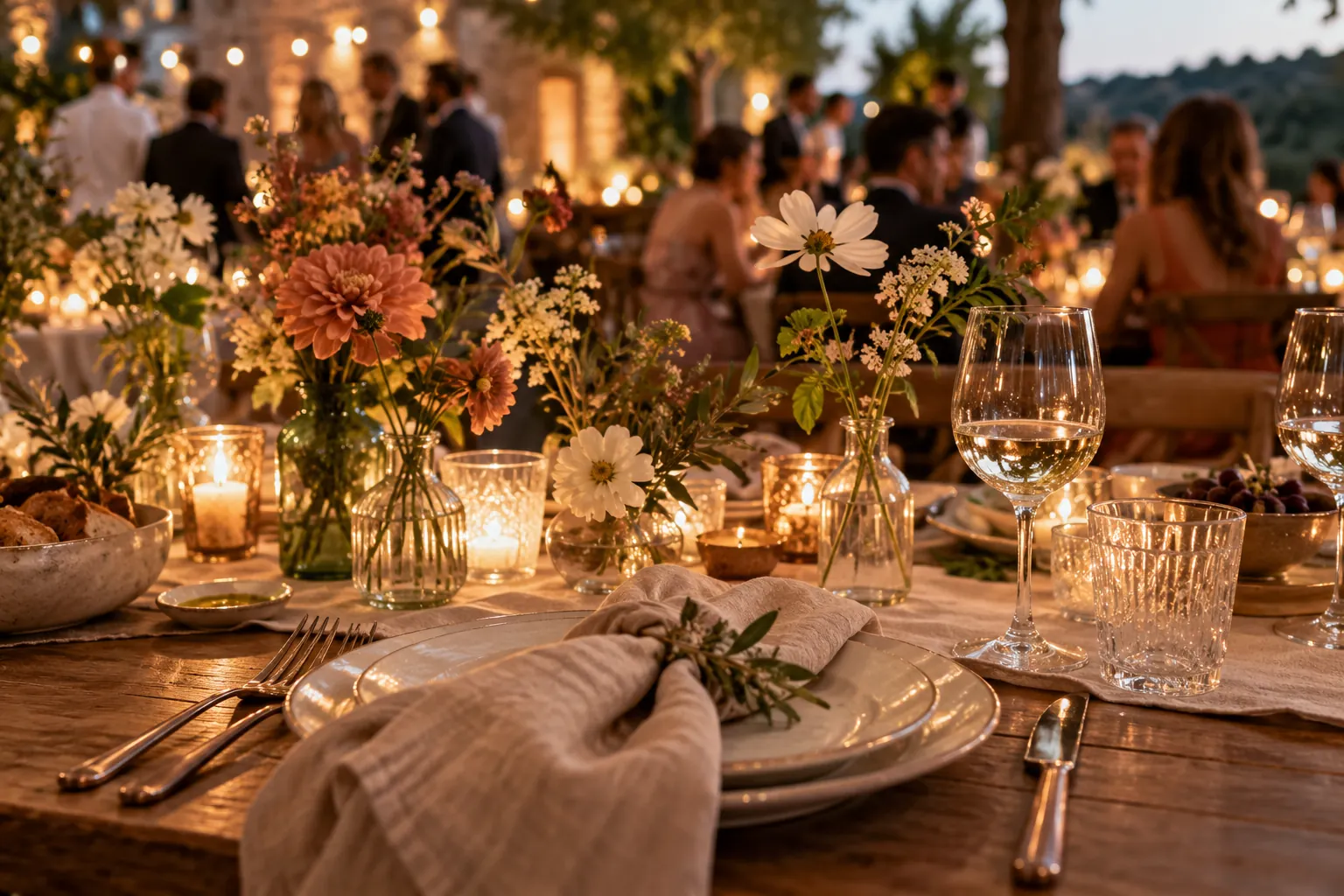
The first ten minutes set the tone
The welcome begins before the ceremony. A clear invitation gives the address, start time and an honest note about parking or transit. If the venue has several gates or buildings, identify the correct entrance. A small, readable sign at the last turn is more useful than a collection of decorative signs at the doorway. Assign one person who can answer practical questions without pulling the couple away from the moment.
If guests arrive from out of town, a concise information page can explain the dress code, likely weather and distance between the ceremony and reception. Avoid burying these details beneath a long account of how the couple met. Good logistical communication is a form of hospitality.
The ceremony they can actually experience
Sound matters. Test the microphone in the seating area, not only beside the speakers. For an outdoor ceremony, consider wind and the angle of late-day sun. Reserve clear paths for guests who need mobility support and identify seating that works for hearing, visibility and comfort. If you have a long standing ceremony or a hot venue, provide seating and water where practical.
A short introduction to a reading can give it context; an exhaustive explanation can interrupt its rhythm. Ask readers to rehearse their pace. Consider whether guests from different cultures or faith backgrounds need a line of explanation to understand a ritual. They need not be taught every detail to feel included.
Food is more memorable when it is easy
Guests remember how they felt while waiting. Build a realistic interval between ceremony, photographs and dinner. Make water easy to find. Share dietary restrictions with the caterer in advance and ensure staff know how alternatives are delivered. Labelling a dish clearly is helpful, but staff should be able to answer questions about ingredients and cross contact where relevant. Avoid promising a dish is safe without confirming it with the provider.
The menu does not need to be surprising. A familiar dish prepared well and served at the right time can be a highlight. Consider a small nod to the couple's history, such as a dessert from a bakery they love, rather than requiring every course to tell a story. Our ideas for sharing a couple's story include ways to make that connection feel easy.
Space for conversation and rest
Music changes the character of a reception, and the volume changes who can join the conversation. If there is dancing, leave a quieter area within reach for people who want to talk. Check lighting around steps and paths after dark. If children are invited, be clear about what is available for them; parents can then plan with accurate information.
Seating plans also shape a night. Group people with at least one familiar face when possible. Do not use a guest's dietary need or mobility need as the only reason to place them apart from their friends. Ask privately about support that would be useful instead of assuming.
Small personal touches that land
A short welcome note from the couple, a carefully chosen song, or a late-night snack can carry more warmth than a box of favors. Favors are optional. If you choose them, consider whether people can actually take them home: glass bottles, fragile plants and food items may be difficult for travelers. A table arrangement that leaves room for conversation is another simple kindness.
Wedding photography can show the effort spent on details, but a guest's memory usually follows the feeling of a room. Watch for bottlenecks at the bar, unclear transitions and long gaps with no place to sit. The best fixes are often invisible in the pictures.
What to check during the final week
Walk the guest route from arrival to ceremony seat to dinner table to departure. Read the directions on a phone screen. Ask whether someone who has never visited the venue could follow them. Confirm the timing with the venue and each supplier, and appoint a point person who can handle changes. You can make the day feel relaxed because the practical work has a clear owner.
Make information easy to find
Guests rarely read a long information page from top to bottom on the way to a venue. Put the address, arrival window, entry point and emergency contact near the top of a message. If parking requires a separate entrance, say so. If there is a shuttle, identify its pickup location and realistic departure windows after confirming with the provider. For a remote property, check that a map pin points to the correct gate rather than a service road.
A dress code is most helpful when it names the practical setting: grass underfoot, an outdoor evening that may cool down, or a ceremony in a place of worship with specific expectations. If the event is adults only, communicate this early and kindly so families have time to arrange care. A concise FAQ can hold details; it should never hide the most important ones.
Build breathing room into the schedule
A timeline can look perfect on paper and feel rushed in person. Allow time to move a large group between locations, especially when there are steps, elevators or limited transport. Let the photographer and coordinator know about mobility needs that affect timing, with the guests' permission. If photographs run late, identify who updates the caterer and who explains the change to attendees.
During a long interval, provide a place to sit and a clear sense of what comes next. People relax when they know that dinner has a plan, even if the exact minute changes. A point person can make a simple announcement without demanding that the couple manage logistics themselves.
Make departure part of hospitality
The night is not over when the dance floor closes. Confirm how guests will collect coats, find transport and leave the venue after dark. Check whether a shuttle has a last run, whether rideshare pickup is permitted at the entrance and whether paths are lit. Share those details before the event, then repeat the essentials near the exit. A small closing note can be warm, but the practical information should be immediately visible.
Guests will remember the conversations and the couple's joy. They also remember the kindness of a day that let them arrive, participate and head home without confusion. Careful planning makes that ease possible.
Finally, ask the venue who handles a guest who needs a quiet place, a replacement chair or help finding transport. A named person and a small contingency plan remove the burden from the couple. Good hospitality can be almost invisible because someone has already thought about it.
If a few things go differently, most guests will never know the original plan. Give them a welcome, a clear path through the day and time to connect with you. For decisions that reflect your priorities while staying manageable, see our personal wedding planning checklist.
Planning details and vendor terms vary. Confirm current arrangements with the people and providers involved.