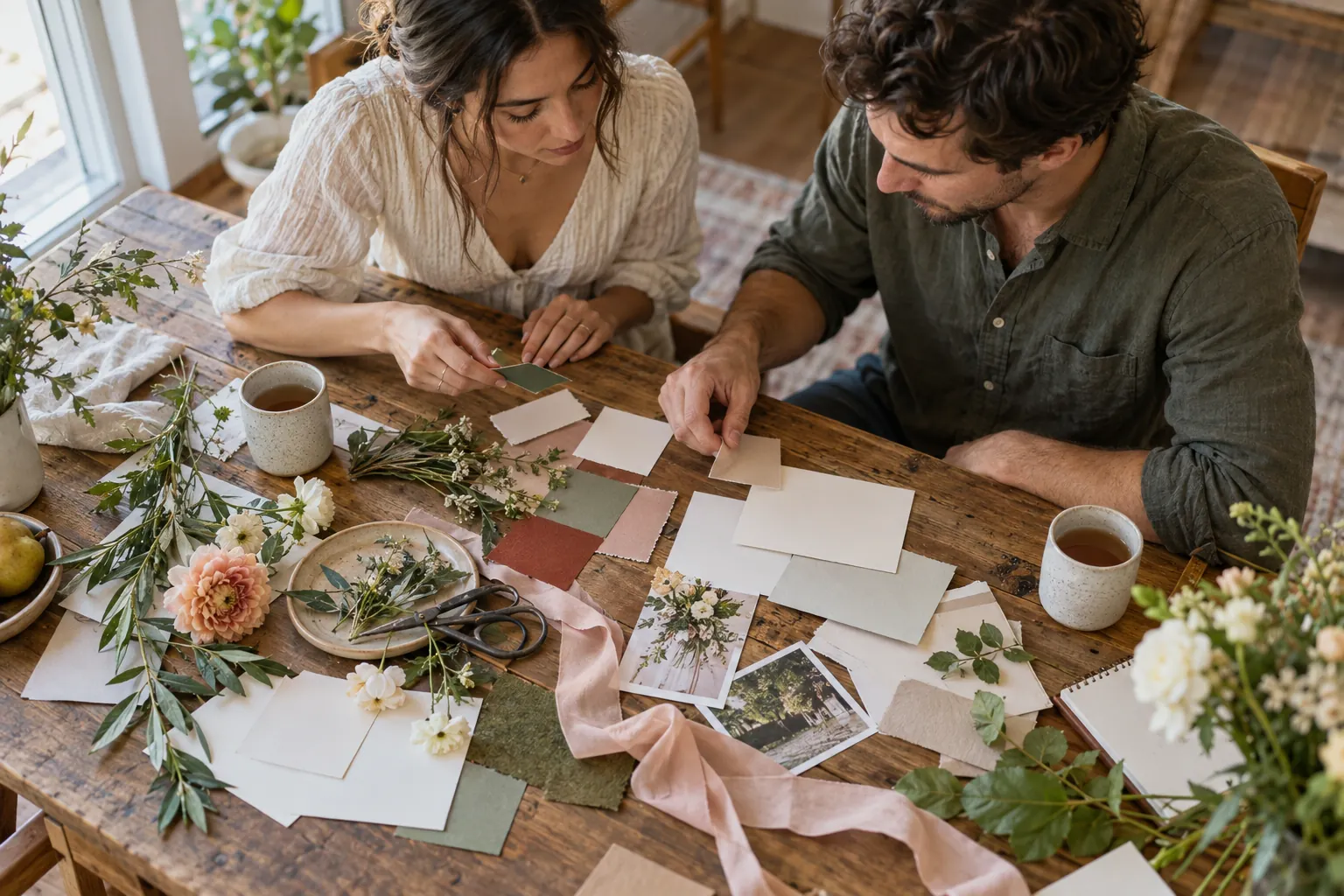
Write your priorities separately
Each partner should list three moments they would miss if they disappeared: perhaps a quiet ceremony, a long meal, dancing, an accessible venue, or time with distant relatives. Compare lists without ranking one person's wishes as more authentic. Where the lists overlap, invest attention. Where they differ, decide how each person can have a meaningful part of the day.
Next, write down three things you are comfortable keeping simple. This list helps when a new idea appears on social media. A project may be attractive in isolation and still have little to do with your priorities. It is easier to decline it when you have already decided what you want the day to feel like.
Design for your real guests
A gathering of twenty close friends can hold a long shared dinner. A larger, mixed-age group may need clearer wayfinding, flexible seating and a more structured timeline. Neither format is more personal. Ask what hospitality looks like for the people actually coming: a shaded path, food that accommodates a guest's needs, a way to hear the ceremony, a simple travel note or a place to step away from loud music.
The best guest-facing details are often plain. Read our guide to the details wedding guests remember before spending on favors. It can help you prioritize comfort and clarity ahead of decorative extras.
Give the ceremony a recognizable voice
The ceremony can carry more meaning than the décor. Ask your officiant how they gather stories. Offer a few moments that show how you treat one another, rather than only adjectives such as “adventurous” or “kind.” Choose readings you connect to, and agree beforehand how much private history you want to share. If you are writing vows, edit them so promises are clear and can be spoken comfortably.
Music can locate people in a particular relationship without becoming a performance of taste. One familiar song played while guests find their seats may matter more than an elaborate entrance. If family traditions are important, talk with relatives about their meaning and whether you want to include them. You can honor a practice thoughtfully without copying every element.
Use a small number of visual ideas
Choose one or two materials, such as linen and seasonal branches, that fit the venue and repeat them gently. A restraint makes any personal object easier to notice. A handwritten menu or a photograph from a place you love can act as a focal point. Check the practical side: small type is hard to read in candlelight; loose papers can blow away outdoors; flowers need a safe spot away from food.
Personalization should survive a plan change. If rain moves the ceremony indoors, a reading, song and welcome still belong to you. A décor scheme that works only in a single photograph may be less resilient.
Protect your time and budget
Price each idea with its full cost: materials, setup, transport, labor and removal. A do-it-yourself project is not automatically cheaper when it takes several late nights. Give complex tasks a deadline several weeks before the celebration. If they are unfinished, simplify or cut them. Put one trusted person in charge of vendor questions on the day so the couple can experience the event.
Before paying deposits or signing supplier agreements, read cancellation and change terms in writing. For legal requirements such as obtaining or replacing a marriage license in the United States, consult the relevant state office; USAGov explains how marriage license and certificate records are handled and points readers toward state authorities. This editorial guide does not replace local requirements.
A final decision checklist
- Does the idea reflect one of our shared priorities?
- Will guests understand how to use or experience it?
- Can it work if the schedule or weather changes?
- Who will set it up, maintain it and take it away?
- Would we still choose it without a photograph of it?
If the answer is yes to the first and last questions, it is worth discussing. If the logistics have no owner, find one or let the detail go. For more small ways to tell your story, see our ideas for celebrating a couple's history. If you are writing your vows or notes, the personal wedding message guide can help you find specific language.
Plan one layer at a time
Start with the fixed conditions: people, budget, location, season and the level of formality you both enjoy. Then map the main guest journey: invitation, arrival, ceremony, meal and departure. Only after these pieces make sense should you add custom details. This order can reveal that the best use of a small budget increase is additional transport, a microphone or a more comfortable meal service, rather than another visual installation.
Talk to suppliers about the actual setting. An outdoor ceremony may need a weather backup; a historic venue may restrict open flames or adhesives; an apparently spacious hall may have tight service routes. A personal idea is strongest when it works within those conditions without requiring last-minute rescue.
Share the work fairly
Planning often becomes invisible labor assigned to one person. Make a list of decisions and name an owner for each, including research, comparison, follow-up and final confirmation. “You handle flowers” is less useful than “You will request quotes, compare seasonal alternatives and confirm installation rules by this date.” Review the list together at a regular, short check-in.
Friends may be eager to contribute. Ask them for bounded help they can comfortably decline, such as setting out place cards for thirty minutes. Do not assume a guest wants an unpaid shift on the day. A professional coordinator or a clear vendor lead may be the right budget choice if the logistics are complex.
Preserve unplanned time
A schedule can include short spaces for the couple to be together without cameras or a line of greetings. Decide where you will sit for a few minutes after the ceremony and who will make sure you have food and water. If private time is a priority, tell the photographer and coordinator so it does not disappear into another portrait request.
After the event, notice which choices worked and which faded into the background. That reflection can help you make sense of the photographs and the memories. You do not have to justify every detail to guests or compare your wedding to someone else's. The celebration is allowed to be a good day rather than a perfect production.
Ask one trusted person to read the final guest information as if they had never heard about the event. Their questions can reveal missing details about the entrance, timing or transport. Correcting one confusing sentence before invitations go out is easier than answering the same question repeatedly during wedding week.
Give yourselves permission to make a few memorable choices and let the rest be ordinary. The people who love you are gathering for a marriage, and your thoughtful welcome gives them a way to celebrate it with you.
Planning details and vendor terms vary. Confirm current arrangements with the people and providers involved.