Choose before the boxes multiply
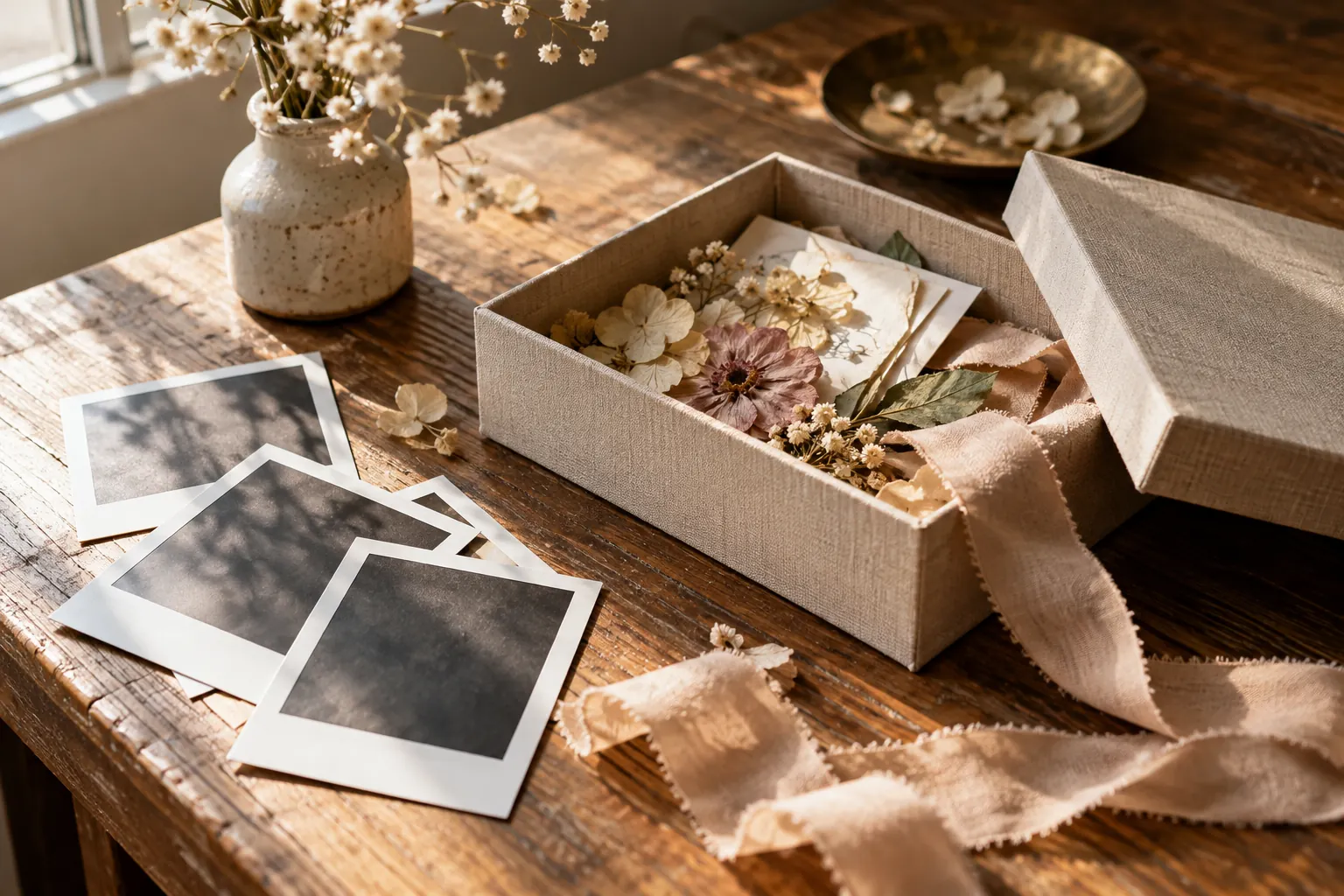
Set aside one small container during the week of the wedding. Add items as they arrive, then edit later. A simple selection might include a printed invitation, ceremony program, menu, a copy of the vows if both partners want to keep them, and a few notes from guests. Photograph a large or fragile item before recycling it. The goal is to preserve a story, not recreate the whole room in storage.
There are no universal heirlooms. One couple may care about a fabric swatch from the suit; another may treasure the handwritten schedule with coffee stains. Decide together what each object means. If an item belongs to a relative or vendor, ask before taking it home.
Paper memories deserve better storage
Separate photographs from acidic paper if possible, and use photo-safe sleeves or an archival box for documents you intend to keep for decades. Store the box in a stable, dry indoor place rather than a damp basement or hot attic. Write names and dates on a separate note or on the back of a sleeve, rather than pressing hard on the front of a photograph. Make digital backups of important scans.
A handwritten wedding card often contains more character than a printed favor. You can choose a few to display temporarily and keep the remainder together. If messages include sensitive family history, consider who else might see an album or shared digital folder. Private memories can stay private.
Flowers, fabric and objects
Pressed flowers can change color and become brittle. If you want to preserve a bouquet, decide early whether you will press a few blooms yourself or use a professional service. Ask about preparation times, costs and what happens if a particular flower does not preserve well. A photograph of the arrangement is often the most reliable record of its original shape and color.
Fabric from a dress, veil or table runner can be saved without cutting up an item you might later wear or pass along. Keep the original intact if uncertain. A small piece of ribbon, a spare button or a sample from the maker may carry the memory with fewer storage concerns. Display framed objects out of direct sun when possible.
Make a keepsake you will revisit
A good album has enough context to be enjoyed by someone who was not there. Mix portraits with small scenes: the room before guests arrived, a parent's expression, the late-night table. Add names while you remember them. A slim annual book containing one favorite wedding photo alongside the couple's later travels can help the day remain part of a continuing life rather than a sealed chapter.
Custom prints are another option, especially when based on an original photograph or place that matters to the couple. Browse SpudPrint's wall art and personalized print ideas for format inspiration, then decide what size would actually live in your space. Get permission before printing other people's photographs and check the proof carefully.
A quick comparison
| Item | Best for | Practical note |
|---|---|---|
| Archival box | Cards and small paper pieces | Label by event and store dry |
| Photo album | Sharing the day with others | Add names while memories are fresh |
| Pressed flowers | A small tactile reminder | Expect natural color changes |
| Digital folder | Backups and family sharing | Keep an extra copy elsewhere |
Make room for guests' stories
Ask a few close friends for a photograph or a short memory after the wedding. Do not pressure everyone to contribute to a formal project. Some of the best accounts are ordinary: who helped an older guest find a seat, a conversation during dinner, the song that brought everyone to the floor. Date and name contributions so you can understand them later.
If you are considering a keepsake as a gift, think about whether the couple would prefer to select the image or design themselves. Our wedding gift guide offers ways to make that choice flexible. For a note to accompany a memory, try the wedding card writing framework.
Preserve digital memories deliberately
Professional galleries can be delivered through a link that may not last forever. Download your permitted files, check that they open and keep a second copy somewhere separate. Name a folder with the event date and a short description. Ask the photographer about the rights included in your agreement before printing or sharing images with a third party. If friends send phone pictures, save the original files rather than only screenshots from a messaging app.
A shared folder can be convenient, but think about who can view or upload. Not every guest wants an unflattering candid image widely circulated. Curate public sharing more carefully than a private archive, and ask before posting intimate or sensitive moments.
A small ritual for looking back
A keepsake becomes more meaningful when it is revisited. Choose an anniversary afternoon to open the box together, or select one image for a frame each year. Write down a few memories while their details are still close: what surprised you, which conversation you wish you had recorded, what the weather felt like. These notes do not have to be polished. Their value is the ordinary specificity that will fade from memory.
Invite a relative to identify people in older family photographs if those pictures became part of your wedding. Names and relationships are easier to confirm now than years later. Store that context alongside the image, not only in a phone conversation.
A simple index on the box lid can help: list what is inside and who appears in the photographs. If a future family member opens it, that small key to the contents will make the collection easier to understand.
When an object is hard to let go
Some keepsakes come with guilt: a favor made by someone you love, an enormous arrangement, a gift that does not suit your home. Photograph it, thank the giver, and allow yourself to keep the memory without storing the thing forever. A few items may deserve space simply because they carry an emotion you cannot yet name. Place them in a temporary box and revisit it after several months.
If you are preparing keepsakes for another person, avoid making decisions about what they must preserve. Offer a beautiful empty box, an album credit or a printed selection they can change. Their relationship to the day may be different from yours, and that difference is worth respecting.
If you plan to frame a program, card or pressed flower, leave some margin around it and choose a reversible mount where possible. Adhesives can stain delicate paper. You can photograph the finished arrangement before hanging it, creating a second record if the object changes over time.
Keep what invites you back into the day, then let the rest go. A curated handful of objects can tell a fuller story than a cupboard of unlabelled bags.
Planning details and vendor terms vary. Confirm current arrangements with the people and providers involved.