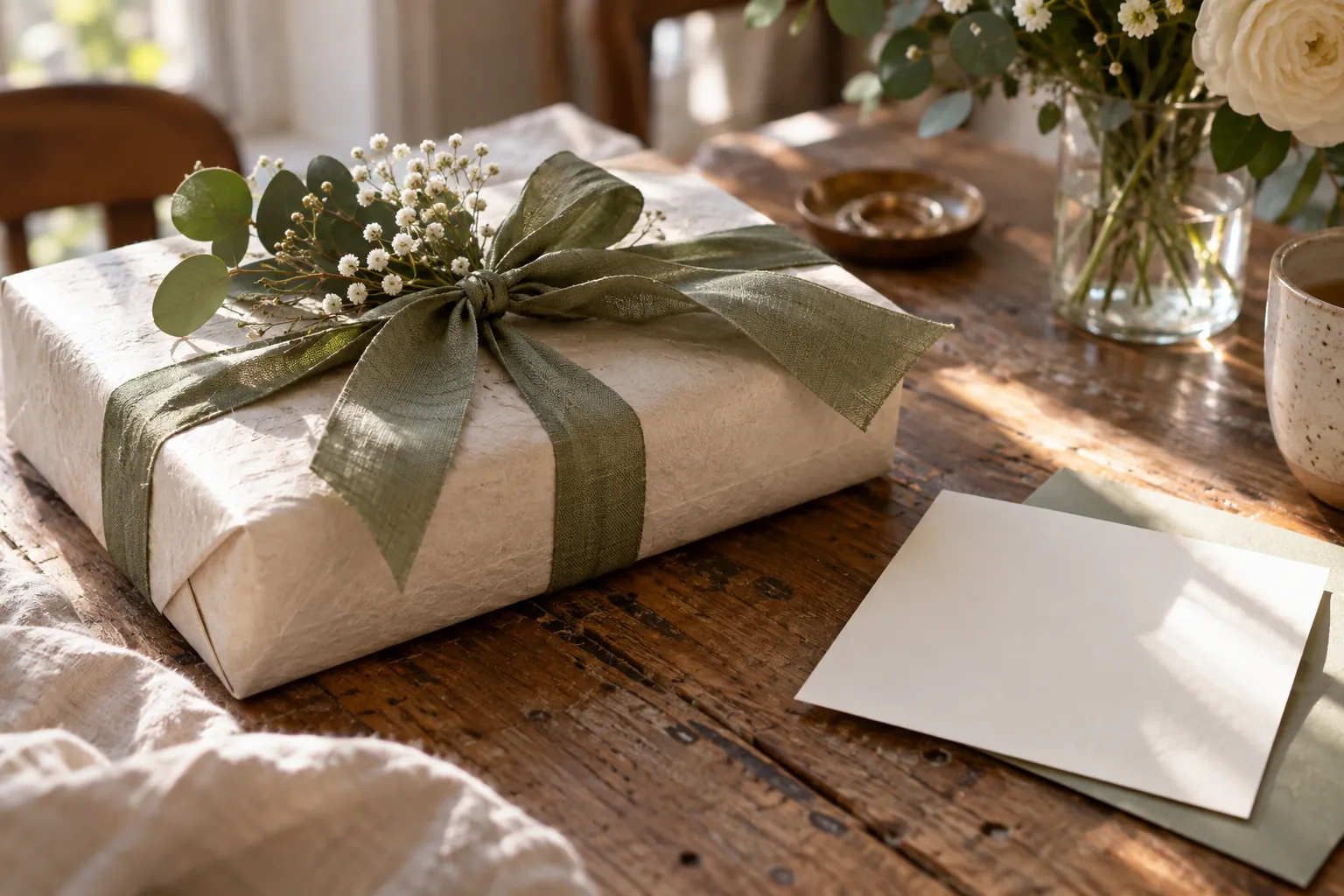
Gifts & gestures
Meaningful Wedding Gifts for Modern Couples
Find wedding gifts that fit the couple, from useful home upgrades to shared experiences and personal keepsakes, with practical ways to choose well.
Read the story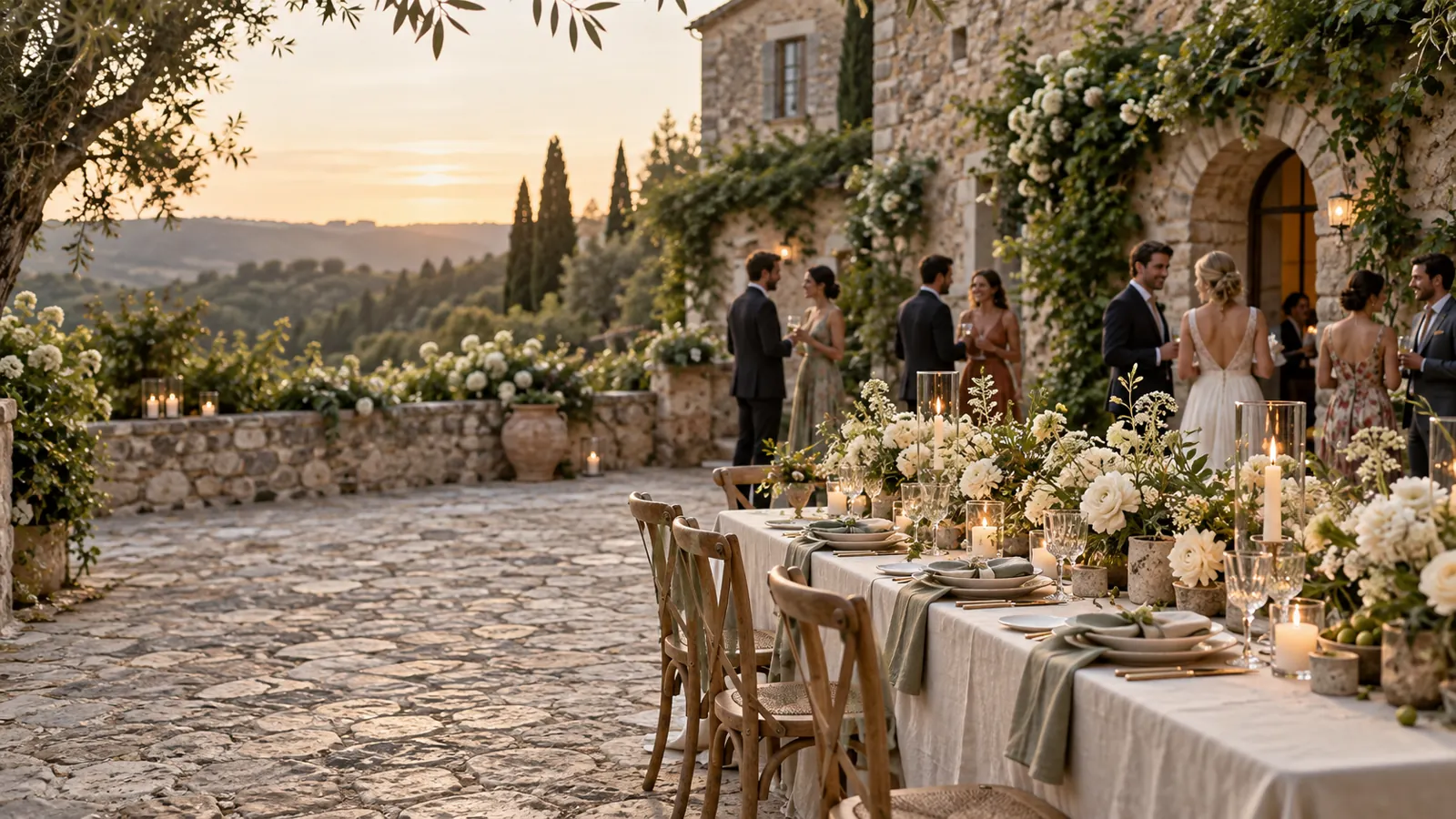
Ideas for a celebration that feels like your story: thoughtful details, warm hospitality and the quieter moments you will want to remember.
Explore the storiesWedding planning is full of appealing possibilities. The useful question is which ones help two people celebrate with the people they love.
This journal looks closely at the choices behind a meaningful day: the language of a card, the ease of a guest's arrival, the objects worth saving and the small rituals that make a room feel unmistakably yours. We write for couples and for the friends and family who show up for them. There is room here for a large party, a quiet gathering and every sensible variation in between.
The name Wedding Blog Awards belongs to the publication; it does not imply that we give industry prizes. Our focus is practical editorial work. We value examples a reader can adapt, gentle advice that leaves room for budget and culture, and the clear difference between inspiration and requirements. Read more about our purpose and topic areas.
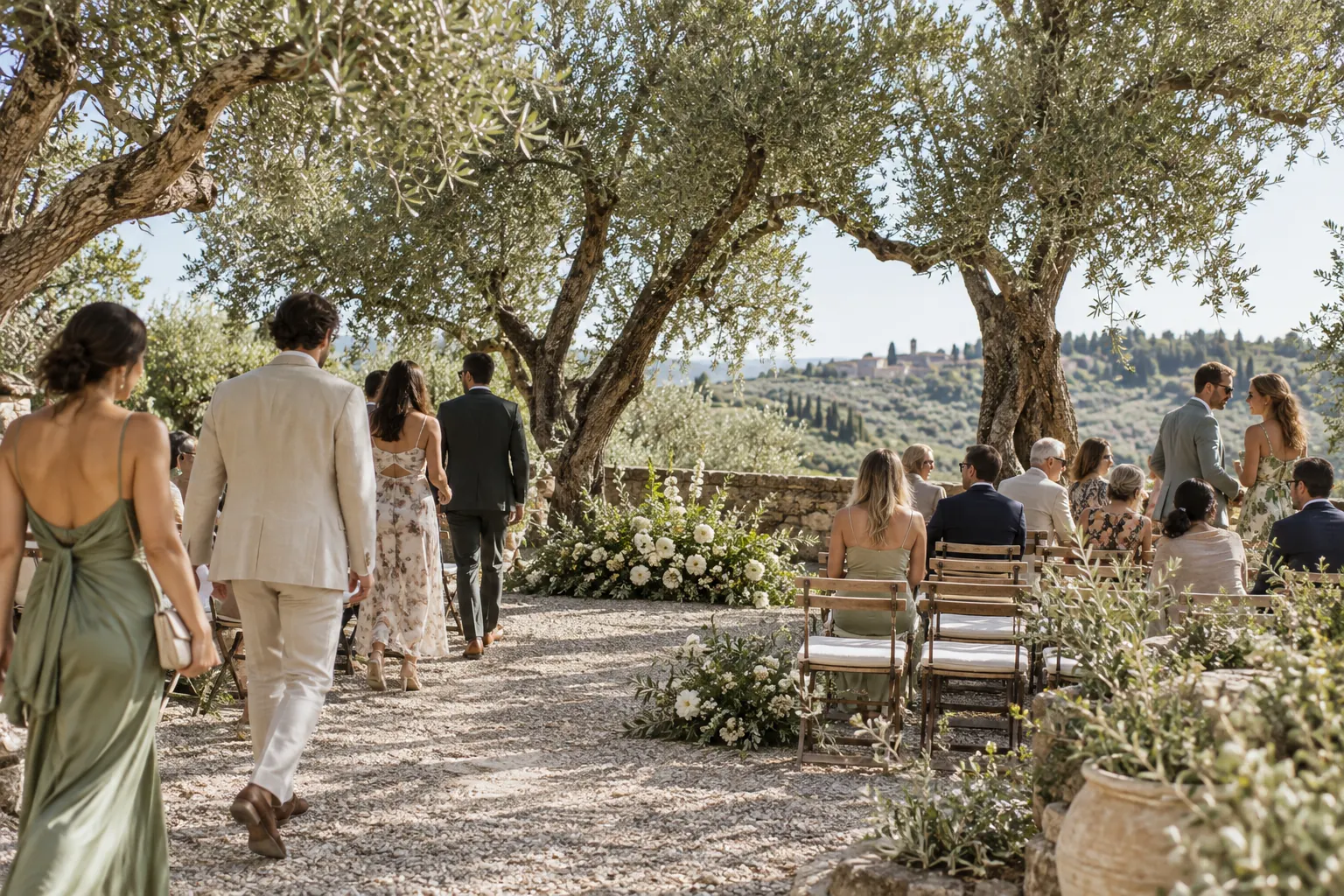
A setting that leaves space for the people in it.
A beautiful plan becomes more useful when it answers a real question about the day.
How should guests feel when they arrive? What part of the ceremony would you regret rushing? Which moments deserve your energy and which can be pleasantly simple? Partners can answer separately, compare notes and find a shared center before booking the extra pieces. That conversation often saves more money and stress than a longer checklist.
Choose two or three priorities: perhaps accessible travel, unhurried dinner and a ceremony in your own words. Give each one a practical owner. The resulting celebration can be distinctive without requiring every chair, menu and napkin to be custom made. Our framework for a more personal wedding turns these questions into a manageable plan.
Read the planning guideChoose the ceremony, hospitality and shared moments that matter to you before adding visual extras. A clear priority makes later trade-offs less draining.
Readable directions, suitable seating and a comfortable pace let guests participate. These practical gestures are part of the celebration's character.
Save the objects and messages that call the day back to you. A thoughtful small collection often says more than a box of everything.

People notice when the day makes it easy to take part.
A guest may not recall the exact color of the flowers. They will remember whether they could hear the vows, find a seat, share a good conversation and enjoy dinner without worrying about a dietary need. Hospitality begins with an invitation that explains where to go and continues through the last trip home.
Walk the day as a visitor would. Check the path from transport to the entrance. Notice if a long photo interval leaves people standing, or whether loud music has a nearby quieter option. These choices can be made at any budget, and they change the atmosphere of the room. Explore our guide to wedding details guests actually remember for a practical tour of the day.
Consider the guest experienceFollow the decisions you are making now. These guides give concrete options, common pitfalls and a way to choose what suits your people.
Find wedding gifts that fit the couple, from useful home upgrades to shared experiences and personal keepsakes, with practical ways to choose well.
Read the story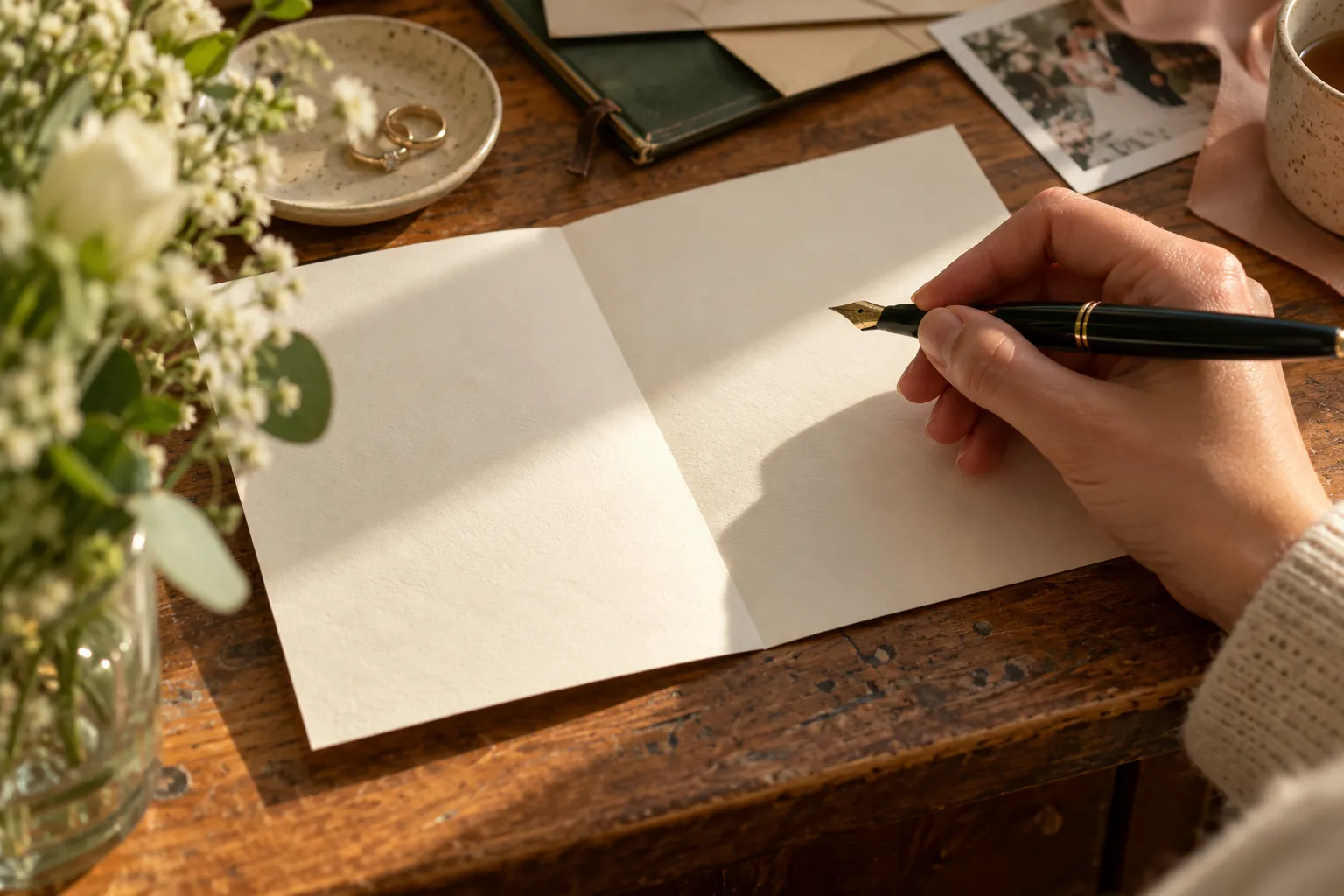
Write a sincere wedding card with a simple four-part approach, adaptable examples, and practical advice for friends, family and colleagues.
Read the story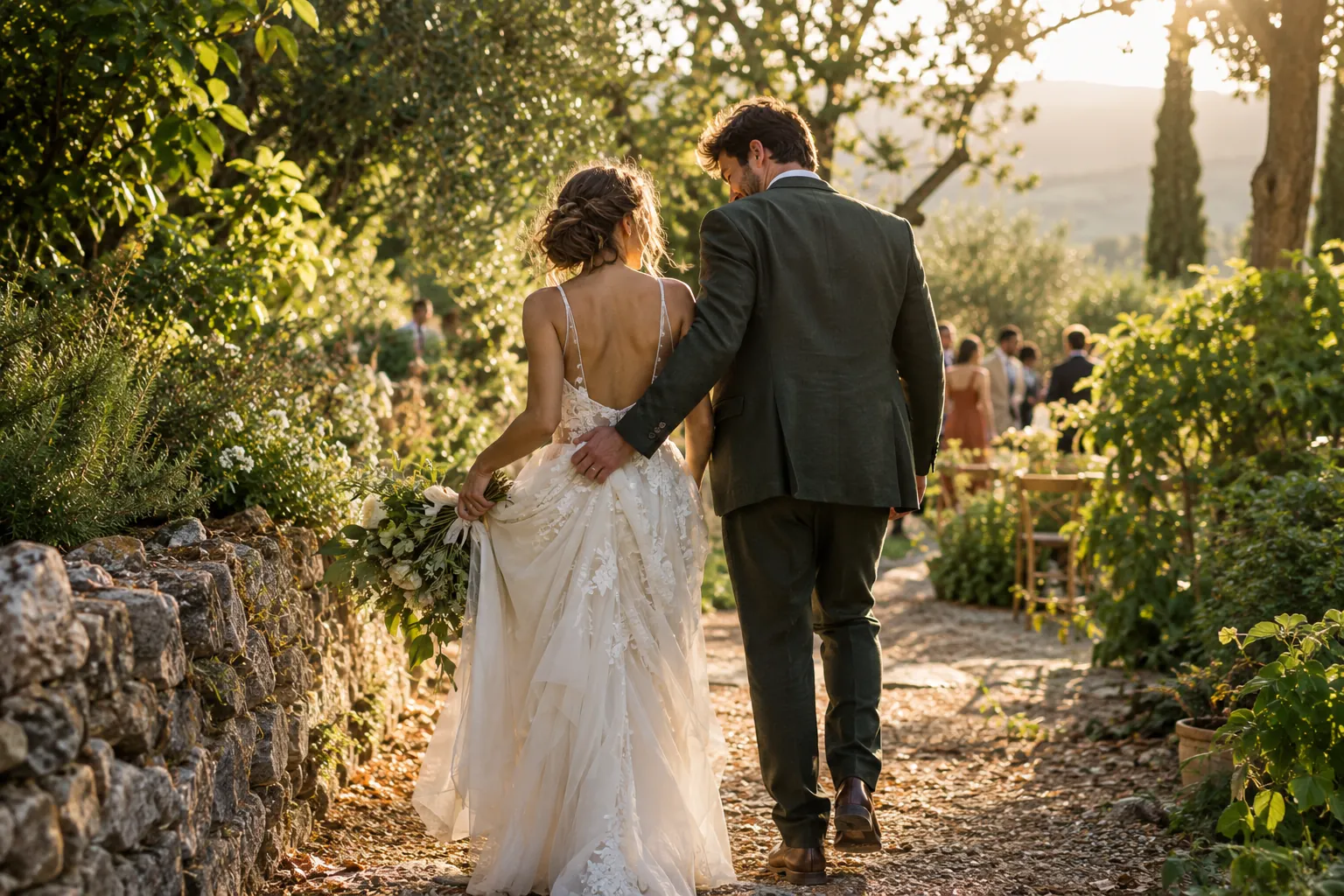
Bring your shared history into a wedding through ceremony words, meaningful details and considerate guest experiences without overdoing it.
Read the storyA card or vow does not need an impressive quotation to feel sincere.
Start with one thing you have actually seen: a couple making a difficult week lighter, welcoming a stranger to the table, or returning to a favorite place every year. In a note, name the moment and then name what you hope they carry into marriage. A short message with a real scene behind it reads more warmly than a page of general praise.
If you know one partner better, you can still address both by name and stay honest about the perspective you bring. If your family or culture favors formal language, use it with a detail that belongs to them. Read how to write a wedding message that feels personal for a structure and examples you can adapt without copying another person's voice.
The same principle applies to a toast or a ceremony reading: give the audience enough context to understand why a detail matters, then leave space for them to feel it. Speak naturally and rehearse aloud.
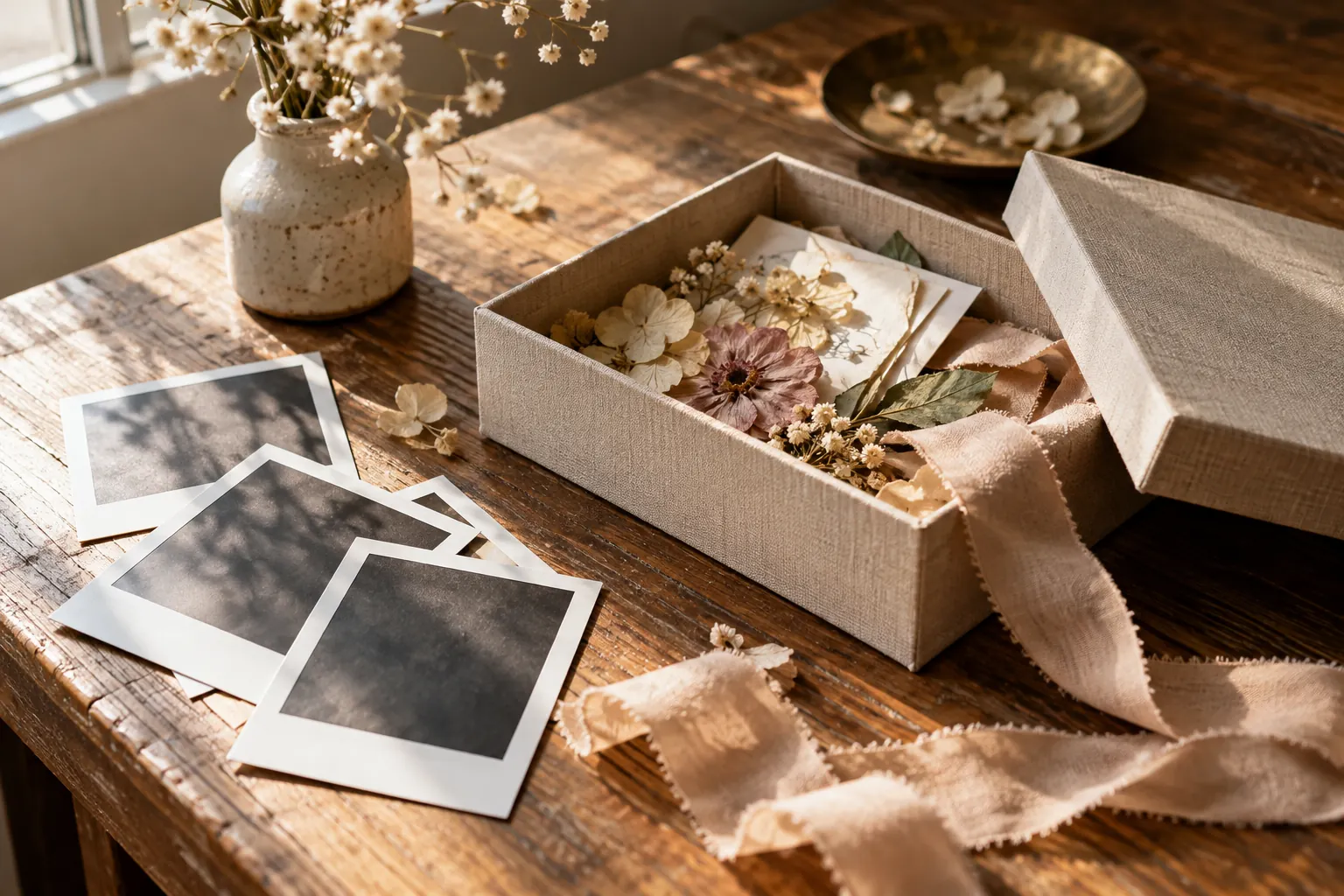
Wedding keepsakes are easiest to enjoy when they are selected with intention. Save a program marked by a relative, a note whose writer sounds unmistakably like themselves, a picture of a fleeting room. Add names and context while you remember them. Then give the paper a dry, safe home and back up important photographs.
A framed image can live in the everyday rhythm of a household. A quiet album can include the preparations and the untidy, joyful aftermath as well as the portraits. If you prefer a box, choose one that is small enough to revisit rather than one that turns into storage for every unused favor. Our keepsake guide compares a few ways to preserve and share these pieces.
“The best detail may be the one that lets someone feel welcome, recognized or a little more at home.”
Meaning does not require spectacle. An accessible chair in the right place, a dish tied to a family memory, or the pause to thank someone can make a larger impression than an expensive object. We return to this idea when reviewing every story in the journal.
Registries are a window into preferences, not a creative obstacle. If the couple has chosen everyday pieces, select one and add a note about the life you imagine it joining. If they ask for an experience or a contribution, respect that choice. A custom object should suit their home, taste and space; it should not require them to rearrange a room to prove they appreciated you.
For couples who already share a household, experiences and thoughtful upgrades may be more useful than duplicates. Check scheduling restrictions on tickets and vouchers. Make sure a personalized design is proofed and the spelling is right. Our wedding gift ideas help you compare useful home pieces, shared time and personal mementos without treating price as a measure of care.
These stories look at what lasts beyond the schedule: the atmosphere you create and the memory you choose to keep.
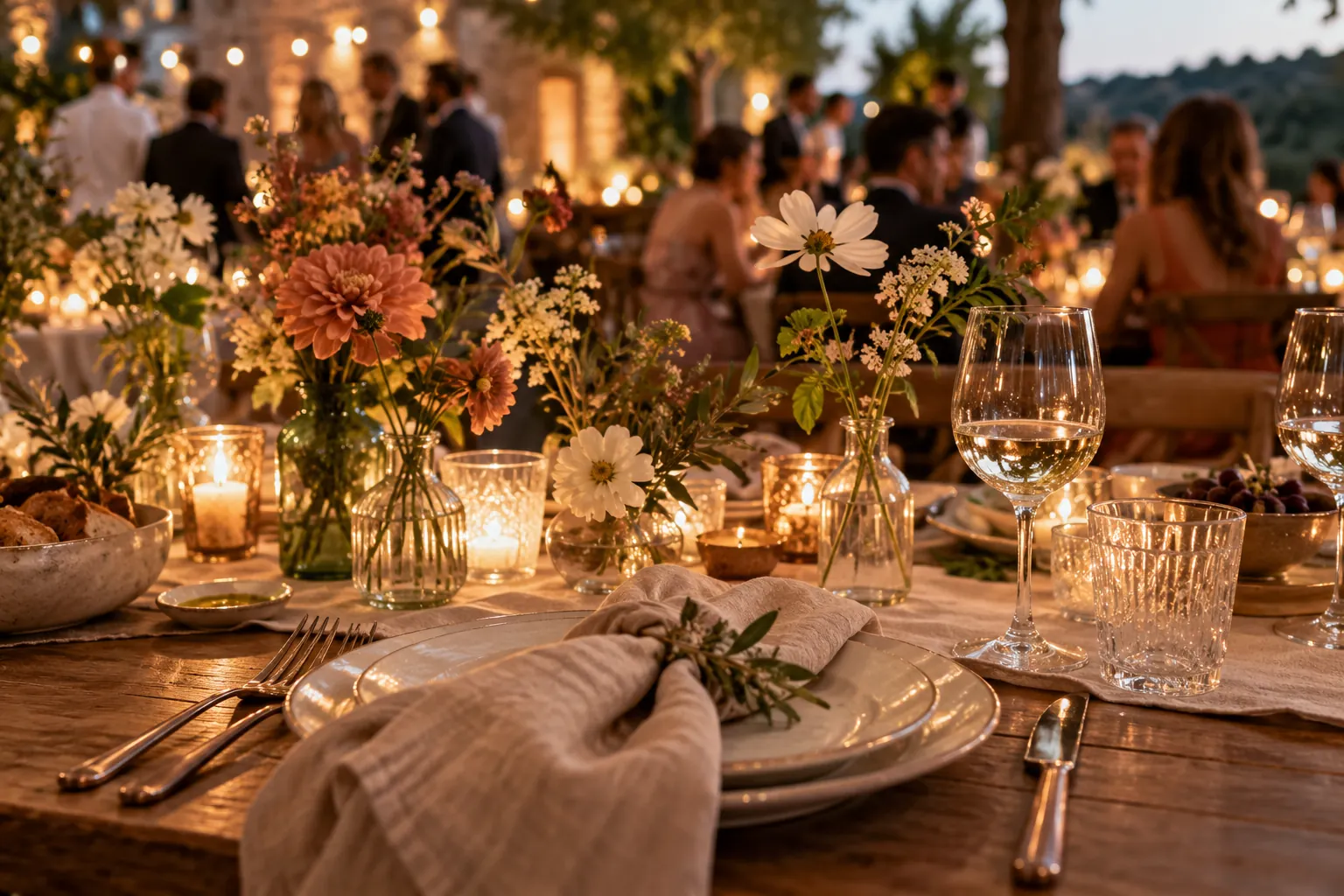
Explore the ceremony, food, timing and small acts of hospitality that help guests feel comfortable and connected throughout a wedding.
Read the storyChoose, store and revisit meaningful wedding keepsakes, including cards, photographs, flowers and the little details that tell your story.
Read the story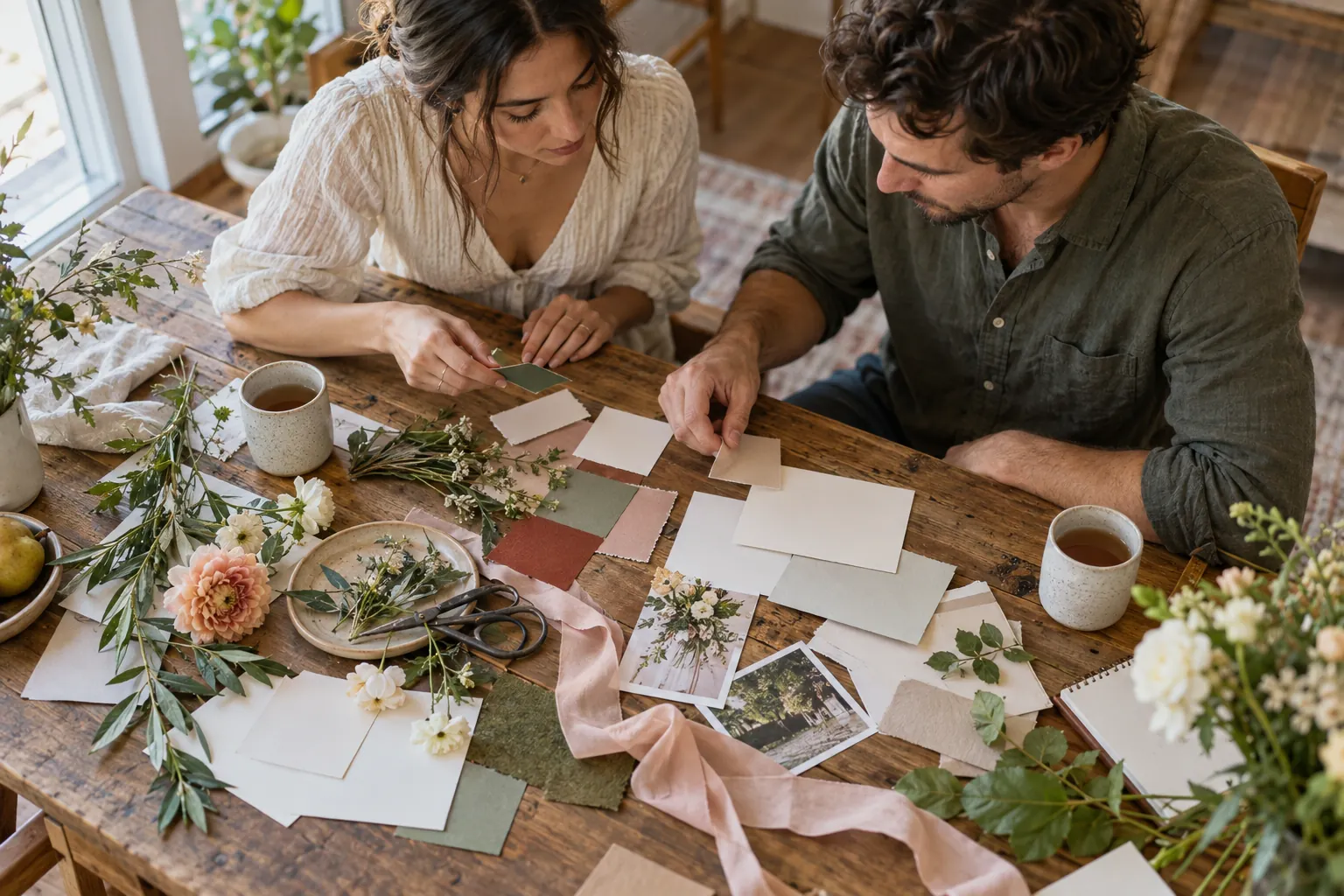
A grounded planning framework for a personal wedding, with priorities, guest comfort, ceremony ideas, resilient details and a final checklist.
Read the storyWedding advice travels across regions, cultures and budgets, but not every suggestion applies everywhere. Venue permissions change. A family's custom may mean more than a trend. Legal paperwork and supplier terms deserve current, local confirmation. We distinguish an idea you can adapt from a requirement you need to verify.
When we link to an outside business, we aim to do so because the example helps a reader understand a product or idea in context. An outside link is not a promise about availability, price or suitability. For legal questions, look to the relevant local authority. For a vendor decision, read the current agreement and discuss its terms directly with that vendor.
Our editorial policy explains topic selection, source handling, corrections and updates. If you spot an issue in a story, our contact page explains how to send the details. That feedback can make an article clearer for the next person planning a day of their own.
We want the wedding to feel like us →
We want guests to feel cared for →
I need to write a meaningful card →
The planning work gets lighter when a few choices have been spoken aloud before deposits and deadlines make them feel fixed.
Set a total you can live with after the day, then include taxes, service charges, travel and a modest reserve for changes. A detail is not free because it can be made at home: count the time and help it needs. If someone offers financial support, clarify what decisions they expect to share so generosity does not become a surprise conflict.
Think about guests with mobility, hearing, sensory or dietary needs as people you know, not as a list of generic accommodations. Ask privately what will help. Check what the venue and caterer can actually provide, then communicate the arrangement clearly to the people responsible on the day.
Talk about the scenes you hope to keep: a few quiet minutes together, a toast from a friend, dancing with family, a meal that lets everyone linger. This can guide photography coverage and the schedule. It also shows which decorations would be nice but do not deserve the same attention.
There is a fourth conversation about permission. Which parts of your story are you happy to share publicly, and which belong only to you? A joke in a speech, a photograph in a slideshow and a family tradition can have different meanings for different people. Agree on boundaries before someone creates a surprise. You can still make room for spontaneity while protecting the moments you would rather hold privately.
These discussions rarely produce a perfect plan in one evening. Write down decisions, revisit them after major bookings and share the essential parts with anyone helping coordinate the event. The point is to have a center to return to when a new idea asks for more space, money or energy than it deserves.
A wedding can be planned with care and still leave space for surprise. Guests may tell a story you had never heard; rain may change the light; a quiet conversation may become the memory you carry longest. Build a plan sturdy enough to welcome those moments. Start with the people, give the practical details a clear place, and let the celebration breathe.
Read the wedding journal